Over 7,000 Lovable sites left their data open, and Cursor explains how it got hacked
A security firm scanned 159,041 Lovable projects and found 7,403 sites where tables with email addresses could be read without logging in; Cursor says its breach started with a key leaked at Fireworks; Claude Code Projects now runs parallel threads under a coordinator; Project Zero is shrinking its disclosure deadline all the way to 30 days

Contents55
Spend 1% of your day keeping up with tech.
Quote of the Day#
“Slop is when we put less effort into producing something than we ask the consumer to spend understanding it.” — No AI Slop: A Manifesto, written by speakers and attendees of AIE Code Summit 2026 (source)
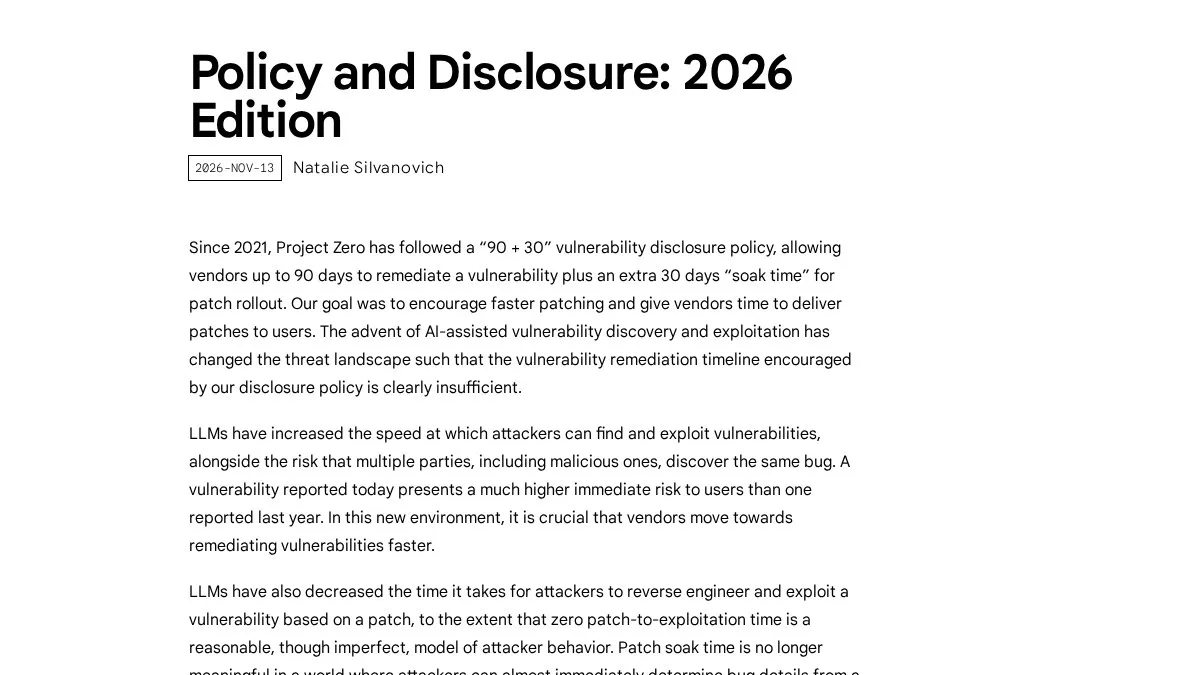
“Patch soak time is no longer meaningful in a world where attackers can almost immediately determine bug details from a patch.” — Natalie Silvanovich, Google Project Zero (source)
“Uninstalling the extension alone may not be enough.” — Cursor, security incident update (source)
Today’s Theme#
The Lovable report hit hardest today. A Hamburg security firm scanned well over a hundred thousand Lovable projects, and plenty of sites let anyone read other people’s emails, chat messages, even passport numbers without logging in. Building an app got easy. Someone still has to check who can read each table.
Cursor wrote up its breach the same day. It started with a key Cursor had issued to Fireworks. From there the attacker found unredacted credentials in training data, got into internal tools, and planted a fake Claude Code extension in the marketplace. After reading it, the first thing I did was check the keys I’ve handed to outside services.
Google Project Zero says AI has made finding bugs and reverse engineering patches much faster, so its disclosure deadline is going from 90 days down to 30. If you ship apps, how fast you fix bugs and push updates is now a security question.
On the tools side, Claude Code Projects now has a coordinator running several parallel threads, each opening PRs on its own branch. Speakers at AIE Code also published a No AI Slop manifesto, a reminder that agents can produce fast but the reader’s time costs the same as ever.
We also learned why the FAA grounded US flights: an old copper line was being swapped for fiber, and a new router flooded the network. Whether it’s AI-written code or routine maintenance, the step that breaks is often the one nobody looked at twice.
Must Read#
- Lovable-built sites leak at scale: 7,403 sites expose tables with email addresses without login, plus passport numbers
- Cursor details its breach: it began with a key leaked at Fireworks and ended with a fake Claude Code in its extension marketplace
- Claude Code Projects redesigned: a coordinator runs parallel threads that each branch, test and open PRs
- Project Zero changes its disclosure rules: 90 days now, 60 days from February, and just 30 days from January 2028
- EFF: smart glasses and always-on recorders turn your privacy into everyone else’s problem
- Why the FAA grounded US flights: a copper-to-fiber swap and a new router that flooded the air traffic network
- The No AI Slop manifesto: AIE Code speakers sign on to protect the people who have to read agent output
- Nathan Lambert: with Jensen gone, US open models lose their biggest backer
- Italy fines Meta €805m after the Facebook app used one gallery permission to generate post suggestions
- A petition to bring Jensen Huang back to Nvidia passes 115,000 signatures, with Musk and the Replit and Epic CEOs signing
- TechCrunch’s AI graveyard: Character.ai went bankrupt, Sora shut down, and 42% of corporate AI projects get abandoned
- Tesla opens personal Cybercab pre-orders: $29,990 plus $299 a month, and it only runs in set areas
1. Lovable-built sites leak at scale: 7,403 sites expose tables with email addresses without login, plus passport numbers#
8 min read · security research · Hacker News

Why it matters to you: If you built an app with an AI tool on top of Supabase and the table permissions are wrong, anyone can read your data with the key already sitting in the frontend.
Summary: Hamburg security firm Crissy Field pulled 159,041 Lovable projects from Common Crawl between December 2025 and September 2026; 34,545 of them used Supabase. 24,664 sites sent database records as soon as they loaded, and with further read-only requests using the same API key, the team found records with email addresses in 10,560 tables across 7,403 of those sites (30%). The worst cases include a German lifestyle forum exposing more than 80,000 profiles and over 200,000 chat messages, a service provider exposing more than 1,000 identity records with passport numbers, plus ticket sales, contracts, invoices and AI summaries of a property company’s internal email. The report warns the 30% figure isn’t a confirmed leak rate, since some emails are public contacts or test data and the sample doesn’t represent every Lovable app.
Lovable: Many Apps Expose Sensitive DataOur analysis of 159,041 Lovable projects reveals many cases where sensitive data was accessible without logging in.crissyfield.de- Takeaway 1: The report points out that Lovable’s terms put responsibility for apps and data on customers, which sits awkwardly next to marketing that says no technical background is needed
- Takeaway 2: Because Lovable’s database integrations follow the same patterns, an approach that works against one app is likely to work against many others
Community: The HN thread had about 509 points and 185 comments. One commenter compared letting people ship public apps without understanding data and permissions to letting someone fly a passenger plane without a license; another cited the old rule of never building your own auth and said AI makes it easier to forget. On X, people boiled it down to one line: RLS turned on with select using (true) is still wide open.
Why I care: I’m going back over the read rules on every table in my Supabase and Firebase projects today, especially migrations an AI wrote for me. Anything readable with the anonymous key, I treat as already public.
2. Cursor details its breach: it began with a key leaked at Fireworks and ended with a fake Claude Code in its extension marketplace#
7 min read · incident report · X @cursor_ai

Why it matters to you: Keys and data you hand to outside AI vendors become your attack surface, and Cursor lays out the whole chain clearly.
Summary: Cursor says an attacker obtained an access key Cursor had issued to Fireworks, exposed on the Fireworks side, and used it to copy data from a read-only bucket. It held coding agent traces from sessions without Privacy Mode, mostly from 2025, and a few contained unredacted credentials; fewer than 0.01% of customers had API credentials exposed. With those, the attacker reached some SaaS tools Cursor uses and saw archived non-production repos, some support data and credentials users had sent to support. On October 29, using a stolen credential, the attacker placed malicious copies of Anthropic’s Claude Code extension (2.1.312 and 2.1.313) on the cache behind Cursor’s extension marketplace. It stayed up about 11 hours and at most 5,000 users may have received it. Cursor says the last attacker activity was on November 1 and was blocked.
An update on our recent security incident · CursorAfter an extensive investigation over the past two weeks, we want to share more context on the attack and the related impact.cursor.com- Takeaway 1: Not affected: prompts and code under Privacy Mode, the Cursor app and its official updates (shipped from a separate code system, no signing keys exposed), and customer repos
- Takeaway 2: Fixes include moving all inference off Fireworks, rotating every internal credential, adding secret scanning across repos, and restricting vendor network access so stolen credentials don’t work from elsewhere
Community: Cursor’s post on X drew about 1,952 likes, 525k views and 184 replies. If you installed or updated either version in Cursor on October 29, Cursor says uninstalling the extension may not be enough and you should follow its security notice.
Why I care: Two reminders for me: strip credentials before data goes to any vendor for training or analysis, and lock outside keys to where they’re used from. I’m listing every key I’ve handed out and shrinking scopes where I can.
3. Claude Code Projects redesigned: a coordinator runs parallel threads that each branch, test and open PRs#
5 min read · product update · X @ClaudeDevs

Why it matters to you: If you run several agent sessions at once, you’ve been splitting work, handing off and merging by hand; this redesign lets Claude manage that.
Summary: Anthropic says that in a Claude Code project you describe what needs doing and Claude scopes it, delegates to parallel threads, reviews the outputs and assembles the result, and you can check in from your phone while it keeps working after you leave your computer. Each thread is a Claude Code cloud session on its own branch and copy of the repo; if two threads touch the same code, it’s resolved as a merge conflict like any PR. Their examples: set a goal to cut checkout p75 latency and have Claude profile each endpoint, test optimizations and open PRs, or connect API, web and mobile repos to retire a deprecated v1 endpoint. It’s in beta for select Pro and Max users on cloud sessions with no existing projects, expanding over the next week, with Team and Enterprise after that.
Projects redesigned: from folder to conversationA new experience for Claude projects, now available in beta in Claude Codeclaude.com- Takeaway 1: You configure the project’s cloud environment, connectors, plugins, instructions and model, and Claude starts by suggesting work it can pick up right away
- Takeaway 2: Each thread can split its work further with subagents, loops and workflows so large assignments finish faster
Community: ClaudeDevs’ announcement on X had about 16,036 likes, and the HN thread had about 98 points and 91 comments.
Why I care: Changes that span a Flutter app and its backend across several repos are a good fit to try. I’ll still read every PR a thread opens before merging, and have CI ready first.
4. Project Zero changes its disclosure rules: 90 days now, 60 days from February, and just 30 days from January 2028#
6 min read · policy · Hacker News
Why it matters to you: For any library your app depends on, the time between a bug report and public details is shrinking, so fixes and updates need to move faster.
Summary: Since 2021 Google Project Zero has used ‘90 + 30’: vendors get 90 days to fix, then 30 more days for users to update. The new policy is ‘Full X’, meaning disclosure X days after the report whether fixed or not. It’s Full 90 starting now, Full 60 from February 2, 2027 and Full 30 from January 3, 2028, and special cases like the grace period and variant policy are gone. The reason: LLMs help attackers find and exploit bugs faster and reverse engineer patches almost immediately, and Project Zero’s own report volume has exploded, with several bugs a week in targets that used to yield a few a year. Only three exceptions remain: bugs exploited in the wild, bugs already made public by others, and vendor requests.
- Takeaway 1: Project Zero says it phased the change after asking the vendors it reports to most, to avoid suddenly handing attackers unfixed bugs
- Takeaway 2: They also call out the ‘patch gap’, the time between a fix shipping and users installing it, which vendors also need to shrink
Community: The HN thread had about 105 points and 18 comments.
Why I care: For app developers, the patch gap is review time plus how long users take to update. I’m getting a forced-update threshold and Remote Config kill switches ready so I can actually push a fix when it matters.
5. EFF: smart glasses and always-on recorders turn your privacy into everyone else’s problem#
8 min read · opinion · Hacker News

Why it matters to you: If your app records, films or summarizes conversations, consent from your user isn’t enough; think about the bystanders who get captured.
Summary: EFF’s Thorin Klosowski names the products: Meta and Google smart glasses that record whatever the wearer sees or describe it with AI, Apple Watch’s Audio Intelligence that transcribes or summarizes your day, and Amazon’s Bee devices that record and transcribe everything. Privacy was always a team sport, he argues, but these devices move the choice into the physical world where colleagues, family and strangers are pulled in, and there’s no technical protection for people who aren’t the user. The technical promises companies make only cover the device owner. He also warns that once the data exists, law enforcement will try to get it.
- Takeaway 1: The piece suggests treating Audio Intelligence and Bee as always-recording microphones, even when companies say no audio is technically stored
- Takeaway 2: Google’s terms ask users to agree not to record others without permission or in sensitive places, which EFF says doesn’t work as consent in practice
Community: The HN thread had about 403 points. One commenter asked why this wave isn’t facing the backlash Google Glass got a decade ago; another said every work meeting now has visible and invisible AI guests recording, and opting out feels impossible if you want to stay employed.
Why I care: When I build meeting or voice features, I’ll make the recording state obvious on screen and to anyone nearby. That does more than a longer privacy policy.
6. Why the FAA grounded US flights: a copper-to-fiber swap and a new router that flooded the air traffic network#
4 min read · incident · The Verge

Why it matters to you: One routine network swap grounded a whole country, so when and how you can roll back a change matters as much as the change itself.
Summary: Transportation Secretary Sean Duffy said at a Saturday press conference that Friday’s nationwide ground stop came from routine maintenance at a remote FAA facility: contractor L3Harris was replacing an old copper line that was being discontinued with fiber, and the newly installed router began flooding other air traffic control routers with more than 1,000 connection attempts every 4 to 5 seconds, disrupting radar feeds and communication with planes. The root cause isn’t settled; he said it could be faulty hardware, a misconfigured router or a mistake on L3Harris’s side. FAA acting CTO Rebecca Guy said they saw two places pinging the network at a very high rate and stabilized it after disabling both. L3Harris says more than 70% of the copper-to-fiber conversion is done.
- Takeaway 1: TechCrunch reports that when asked why the work happened at 3pm on a Friday, Duffy said big-airport switchovers happen late at night but remote ones happen during the day, and timing will be reevaluated
- Takeaway 2: Cirium data shows more than 8,200 flights canceled Friday evening and at least 3,000 more on Saturday; it was only the third nationwide ground stop this century
Community: Gergely Orosz asked on X what exactly the software outage was, about 309 likes; the Flightradar24 post he quoted had about 26,334 likes and 5.51 million views.
Why I care: Same for us shipping apps or changing backend config: no big changes on Friday afternoon, and know how to roll back in one step before you push.
7. The No AI Slop manifesto: AIE Code speakers sign on to protect the people who have to read agent output#
15 min read · newsletter · Latent Space
Why it matters to you: If your team is shipping lots of agent-written PRs and docs, this manifesto is a ready-made starting point for that conversation.
Summary: This issue’s lead story is the No AI Slop manifesto, which grew out of conversations at AIE CODE and was introduced by Dex in the closing keynote with many speakers co-signing. Modeled on the 2001 Agile Manifesto, it values outcomes over output, understanding over speed, our own thinking over a model’s first draft, better work over easier work, and improving the system over patching the output. It defines slop as putting less effort into producing something than you ask the reader to spend understanding it, and notes the asymmetry: a thousand-line PR costs almost nothing to make while review cost stays the same. The same issue notes llama.cpp, ggml and SGLang all hitting 1.0.
- Takeaway 1: The manifesto says to be clear when an agent wrote something and check the parts that matter before sending; when you receive slop, kindly ask the sender to review it first
- Takeaway 2: When a mistake shows up twice, improve the system and its guardrails; anything a linter or type checker can catch, let it catch
Community: The HN thread had about 216 points and 129 comments.
Why I care: I agree with ‘when a mistake shows up twice, fix the system’. My version is turning it into a skill or a gate so the next agent run gets stopped.
8. Nathan Lambert: with Jensen gone, US open models lose their biggest backer#
7 min read · analysis · Interconnects

Why it matters to you: If you plan to use open-weight models in your app to cut costs or run locally, this is about the funding and policy risk ahead for that ecosystem.
Summary: Nathan Lambert argues Jensen Huang’s resignation is a major setback for the US open model ecosystem. Nvidia still has reasons to back open models, since they keep demand from concentrating in a few customers who build their own chips, but it’s more of a political puzzle than an engineering one. Nvidia’s top priority now is stabilizing and delivering over the next 24 months, and open models were one of Jensen’s founder-style bets whose funding will likely dry up. He worries about sloppy state-level regulation and says that since this summer we’ve been one strong Chinese open-weight model away from a crisis.
- Takeaway 1: He says the open model economy has latched onto the right lane, ‘ownership of intelligence’ and enterprise post-training, but the size of that market is still unknown
- Takeaway 2: Compute shortages leave inference startups short of chips too, so open models are still served at high margins and are far from a cheap commodity
Why I care: What I run on small open models today is local or cheap batch work, and this makes me more sure to keep the option to swap models instead of tying a feature to one set of weights.
9. Italy fines Meta €805m after the Facebook app used one gallery permission to generate post suggestions#
3 min read · regulation · BBC
Why it matters to you: When your app asks for photo access, a vague purpose can count as no consent at all in a regulator’s eyes.
Summary: Italy’s data protection authority fined Meta €805m (about $887m) for not properly telling about 20 million Android users that the Facebook app could access the photos and videos in their gallery. The issue is a feature that suggests gallery photos as post ideas: Facebook got gallery access through a single app-wide authorization, and the notice beforehand didn’t make clear it would also be used to generate suggestions. The regulator gave Meta 60 days to turn the feature off by default and ask for consent separately. Meta plans to appeal, saying users must grant permission on their device and can change it at any time.
- Takeaway 1: The regulator cited the large number of people affected and that the issue is ongoing for users who haven’t updated or already consented
- Takeaway 2: BBC notes that last month a New Mexico judge ordered Meta to pay $25bn for years of misleading the public about how it handled Facebook user data
Community: The HN thread had about 284 points. One commenter asked how Meta got the photos without a consent prompt and found the reporting thin on detail; another shared enforcementtracker.com for tracking EU fines on tech companies.
Why I care: When my Flutter apps request permissions, I explain each use separately and ask again for a new one. I also support iOS’s limited photo library so users can share only the photos needed.
10. A petition to bring Jensen Huang back to Nvidia passes 115,000 signatures, with Musk and the Replit and Epic CEOs signing#
2 min read · news brief · TechCrunch
Why it matters to you: Jensen’s future affects AI startup funding and chip supply, and the signature count is the clearest gauge of industry sentiment.
Summary: TechCrunch reports the petition asking Nvidia to reinstate Jensen Huang passed 115,000 signatures by Saturday afternoon. The site says signers include 5,965 current Nvidia employees, 1,108 former employees and 63,063 shareholders, with Elon Musk, Replit CEO Amjad Masad and Epic Games CEO Tim Sweeney among them. It says signers are concerned Jensen ‘was removed without meaningful due process’ and asks the board to bring him back while an independent investigation establishes the facts. Huang resigned Thursday, days after admitting an affair with a chip executive US intelligence identified as a suspected Chinese spy; CFO Colette Kress is interim CEO, and the stock fell 2% Friday.
- Takeaway 1: The petition says ‘Jensen deserves due process, not mob justice’ and asks the board to ensure a fair investigation and share more with the public
- Takeaway 2: TechCrunch reported a day earlier that Nvidia joined 105 funding rounds this year and that Huang’s exit leaves a big hole in AI startup funding
Community: levelsio shared the Stand with Jensen petition on X and asked people to sign, about 876 likes.
Why I care: I’m not picking a side here. The practical part for app builders is that GPU prices and cloud inference costs may swing because of this, so leave room in the budget.
11. TechCrunch’s AI graveyard: Character.ai went bankrupt, Sora shut down, and 42% of corporate AI projects get abandoned#
10 min read · roundup · TechCrunch

Why it matters to you: The AI feature you’re building is most likely to die from cost, retention or weak demand, and this list lines up the pits others fell into.
Summary: TechCrunch started a running list of AI products and startups that shut down, pivoted or badly missed expectations. It opens with Character.ai, which filed for bankruptcy last month just five years after launch, and privacy-focused assistant Ollie, which announced its shutdown a few weeks ago. It cites S&P Global Market Intelligence: about 42% of corporate AI initiatives end up abandoned, for reasons like funding, technical problems, competition, scaling or weak demand. OpenAI is on the list too: on July 9 it turned ChatGPT into a super app with Chat, Codex and Work modes and rolled it back after users called it cluttered; the ChatGPT Atlas browser was discontinued on August 9 after less than a year, and Sora shut down in March 2026 over high operating costs and poor retention.
- Takeaway 1: Apple’s new Siri kept slipping and led to a $250 million settlement over iPhone 16 AI marketing; the new Siri is only now rolling out to English-language users this month
- Takeaway 2: TechCrunch frames the list less as a scorecard of flops and more as a record the industry can learn from
Why I care: Sora’s entry is the one I read twice: high running costs plus weak retention. Before building an AI feature I work out monthly inference cost per active user, and if the math doesn’t work I don’t build it yet.
12. Tesla opens personal Cybercab pre-orders: $29,990 plus $299 a month, and it only runs in set areas#
3 min read · product · TechCrunch

Why it matters to you: Hardware plus a monthly fee, only usable in certain areas: a classic subscription design, worth watching how people react if you sell subscriptions.
Summary: Tesla said Friday evening that ‘select customers’ can pre-order the autonomous Cybercab for personal use. Marques Brownlee found buyers must accept delivery in one of a handful of Texas cities and the car only runs in geofenced areas, with estimated delivery in December 2026. It costs $29,990 plus $299 a month to operate. Musk replied that Cybercab will go nationwide as regulators approve it and that the fee is ‘too high’, saying it should match FSD plus connectivity on other models, more like $115 a month. Tesla’s Ashok Elluswamy said it will run unsupervised in the same areas as Robotaxi.
- Takeaway 1: A CEO publicly calling his own monthly fee too high while pre-orders are already open is rare for a consumer product
- Takeaway 2: The Verge also flags the fine print on these orders
Why I care: My biggest worry with subscription plans is users finding out how limited the product is after paying. Put the limits before the paywall and you get fewer refunds.
More to Read#

- Helen Toner, the OpenAI board member who fired Sam Altman, says AI safety can’t rest on any one CEO: Why it matters to you: On Decoder, Helen Toner, now executive director of Georgetown’s CSET, says that if our hopes rest on any one person being trustworthy, ‘we’re screwed’; with Anthropic heading to IPO and the White House offering only a voluntary accord, she explains why board accountability broke.
- How Asian governments are reacting to Jensen Huang’s exit: Why it matters to you: Some governments moved to confirm chip supply, others are watching local projects; China’s foreign ministry denied the spy claims, and more than $3 billion in Chinese AI computing projects that rely on Nvidia now face uncertainty.
- Jensen Huang’s departure blasts a big hole in AI startup funding: Why it matters to you: PitchBook data shows Nvidia joined 105 rounds this year, often as the largest investor; VCs say many of those calls came from Jensen himself, and one neocloud founder said the news felt ‘like a bomb went off’.
- PyPI’s redesigned project pages put security signals front and center: Why it matters to you: PyPI worked with Kabu Creative to rebuild project pages around the OpenSSF Attestations Style Guide, explaining the digital attestations introduced in 2024; one more signal when you pick a Python package.
- Unsloth updates its Qwen3.8-27B quantizations to run locally in 17GB: Why it matters to you: Qwen3.8-27B is a 27B dense model with vision, reasoning and 256K context; Unsloth says its November 11 switch to Dynamic V3.1 GGUFs raised average accuracy 5-10% at similar sizes.
- Google Research on Antigravity’s /teamwork multi-agent results: Why it matters to you: Google says that over recent weeks, Gemini 4 Argon, Carbon and Hydrogen plus /teamwork multi-agent workflows helped experts produce new results in information theory, formal verification, molecular structures and kernel optimization, and the tools are opening up externally.
- PostHog: Not everything needs an LLM: Why it matters to you: PostHog shares what it learned running decision models in production: ask structured questions, get typed answers with probabilities, up to 444.6x cheaper and 193.6x faster than LLMs, useful for classification and routing.
- 10 lines to give your coding agent before it touches your repo: Why it matters to you: The author says your AGENTS.md or CLAUDE.md can be long, but ten lines do most of the work, starting with one line on what the repo is and the exact command that proves the work, in order.
- Benchmarking the Gemini Decisions API on support ticket triage: Why it matters to you: A GDE uses support ticket triage to compare the Decisions API with Gemini 3.8 Flash, 4 Hydrogen, 3.5 Flash-Lite and Gemma 4 E2B on a laptop for accuracy and speed; the Decisions API only charges for input, $0.10 per million tokens.
- Probabilistic data structures in Go: Why it matters to you: Anton Zhiyanov explains how Bloom filters and friends trade a bit of accuracy for lots of space: a million 8-byte strings take about 64MB in a set but 1.24MB in a Bloom filter at 1% false positives, with a Go package called unsure.
- Formalizing the US tax code with Lean: Why it matters to you: The team used Lean to check every cross-reference in Title 26, producing 257 findings that an AI agent checked against the official text: 98 intended, 21 false alarms and 138 real faults, like citations to moved or rewritten provisions.
- An Agile manifesto for agents: Why it matters to you: The author proposes Agent First Development: understand scope together, delegate bounded work to agents and accept delivery through evidence, since five engineers running several agents each can produce five readings of one requirement.
- Why platform teams fail, and AI makes it worse: Why it matters to you: After a decade around platform teams, the author sees the same path: a roadmap, then incidents pulling people into firefighting, and within six months an ops team with a fancy name; generative AI is speeding up the cycle.
- Will we really put data centers in space?: Why it matters to you: Musk says the cheapest place for AI will be space within two or three years; Forethought works through the technical and economic case for orbital data centers and finds the timeline and scale hinge on Starship launch rates.
- LinkedIn and Monster remove 1,000+ fake job postings after a CBC investigation: Why it matters to you: CBC found hundreds of postings on LinkedIn and Monster that funneled applicants into recruiting for a multi-level marketing company; worth knowing if you’re job hunting.
Also Worth a Look#
- Smuggling of 1.5M AI GPUs could be the cause of Huang’s departure - Tom’s Hardware (analysts on banned chips reaching China)
- Daemons can now send traces to Vercel Tracing - Vercel (background daemons can send traces)
- Build cache size limit on Vercel increased to 5 GB - Vercel (build cache limit raised to 5GB)
- Python 3.15 now available as a Vercel Managed Image - Vercel (Python 3.15 available)
- Inkling 2 Small now available on AI Gateway - Vercel (new model on AI Gateway)
- Kimi K3.1 Pro is now available in Token Pass - Vercel (new model in Token Pass)
Show all sources (15 more)Show fewer
- Parallel Decisions now available on AI Gateway for free - Vercel (free through November 23)
- Shield helps technicians hand off legacy portal work with OpenAI - OpenAI (customer story)
- Gondola doubles revenue as its team builds more with Codex - OpenAI (Codex customer story)
- Holiday Extras is rethinking what it can build with Codex - OpenAI (Codex customer story)
- Actor, Judge, or Teacher? Understanding Decision Models in Long-Horizon Agents - HuggingFace Papers (decision models in long-horizon agents)
- Read Less, Solve More: Token-Efficient Sparse Reading of External Content for AI Agents - HuggingFace Papers (agents reading less external content)
- Show HN: Shotoku, local-first action governance and budget caps for AI agents - Hacker News (budget caps for agents)
- Show HN: Sauron, error tracking and product analytics in one self-hosted stack - Hacker News (self-hosted errors plus analytics)
- Creating a self booting ZIP archive - goliath32.com (a ZIP file that boots)
- Demystifying phone unlocking tools: A technical overview - Osservatorio Nessuno (how phone unlocking tools work)
- Swizzle Runtime v0.1.0: 209 tok/s and 43ms TTFT on a 4GB laptop GPU in pure Rust - Dev.to (local inference in pure Rust)
- nginx 1.31’s json_set directive rejects a bad webhook payload about 13 times faster - Dev.to (nginx rejecting bad webhooks)
- Light Pollution Map - lightpollutionmap.app (a light pollution map)
- Got an iPhone Duo? These 9 settings make it easier to use - TechCrunch (iPhone Duo settings tips)
- Amazon’s new Kindle Colorsoft is a premium e-reader with a premium price - TechCrunch (new Kindle review)
Builder Radar#
1. Vercel Sandbox installs private npm packages without the agent seeing the token#
Add credentials: { npm: true } when creating a sandbox and it uses the npm credentials in your team’s Shared Environment Variables, including custom registries like GitHub Packages and JFrog Artifactory. Tokens stay outside the sandbox and the firewall adds auth to install requests, so a coding agent can install dependencies without ever seeing the token. Vercel also said the same day that Sandbox starts up to 4x faster, from about 3.5s to 1.05s in Seoul.
What it means for your app: Read next to today’s Cursor incident: keeping credentials out of the agent’s environment is the most direct defense, and you can apply the same idea to your own CI or agent setup.
2. Claude Code desktop gets custom themes, and T3 Code lets your agent restyle the UI the same day#
ClaudeDevs says Claude Code on desktop now supports custom themes through mods: change colors, add an animated background, just describe it to Claude or start from the theme-examples plugin, about 20,174 likes. Theo said on X that T3 Code lets you ask your agent to customize the UI in app with live updates, about 4,449 likes, and later joked that both teams seem to have shipped the same thing at once, about 1,415 likes.
What it means for your app: Letting users restyle an app in one sentence is becoming standard in tools. If you build Flutter apps, think about exposing ThemeData to AI edits while keeping a floor for readability.
3. Vercel Security Review no longer needs a linked Vercel project#
Vercel Security Review can now scan GitHub repos that aren’t linked to a Vercel project. By default it covers every unlinked repo the Vercel GitHub App can access, and you can narrow that in Agent settings. Once on, every push triggers a review of the changes; linked projects with deployments get extra deployment context.
What it means for your app: Your Flutter or backend repos can use it without being on Vercel. Turn it on for one repo first, see how noisy it is, then decide on the rest.
4. Vercel Token Pass now includes $150 in tokens for the same $30 a month#
Token Pass now includes $150 of tokens a month, up from $80, for the same $30 per team per month, usable on featured open-weight models on AI Gateway like Kimi K3, Kimi K3.1 Pro, GLM 5.3, GLM 5.3 Flash and DeepSeek V4.1 Flash. Credit resets each period with no rollover, and requests on Token Pass-scoped keys simply stop when it runs out, with no overage. It’s an Early Access add-on for Pro teams with limited spots.
What it means for your app: ‘Stops when it runs out, no overage’ matters a lot for solo developers: point batch agent work at it and the bill has a ceiling.
5. Revolut’s October outage postmortem: a missing coordination server nobody was alerted about#
Revolut says a power failure hit one Google Cloud data center in London (Zone B) at about 06:00 UTC on October 20, and some databases couldn’t fail over safely. Its coordination servers run in groups of five across three zones and need three to agree on the primary; some groups were already down one server with no alert, so after Zone B took out two more, only two remained and no new primary could be chosen. Card payments returned at 12:40 UTC, the app and transfers from 15:45 UTC, and everything by 17:15 UTC. Gergely Orosz summarized it on X, about 856 likes, and levelsio used it to argue big companies make basic mistakes too, about 480 likes.
What it means for your app: ‘It still runs with one missing, so nobody notices’ is the scary part. If your backend has replicas or failover, alert on the failover itself being degraded.
6. GitHub Actions lockfiles are GA, pinning even transitive dependencies to commits#
InfoQ reports GitHub made Actions workflow dependency lockfiles generally available on October 28, including on the Free plan. .github/workflows/actions.lock records commits for direct dependencies and transitive ones inside composite actions, and the runner executes those commits even if tags or branches move later. Tooling ships as the gh actions-lock CLI extension, with a verify mode you can run as a CI check, and Dependabot updates the lockfile in the same PR when it bumps an action. GitHub is clear about the limit: the lockfile guarantees you run the commit you pinned, not that the commit is safe. Separately, pull_request_target will be blocked by default starting December 2.
What it means for your app: Start with high-privilege workflows like release and deploy, and keep auto-merge off for Dependabot PRs, since that review is where the real check happens.
What the Community Is Arguing About#
1. If AI solved coding, why is my software still the same?#
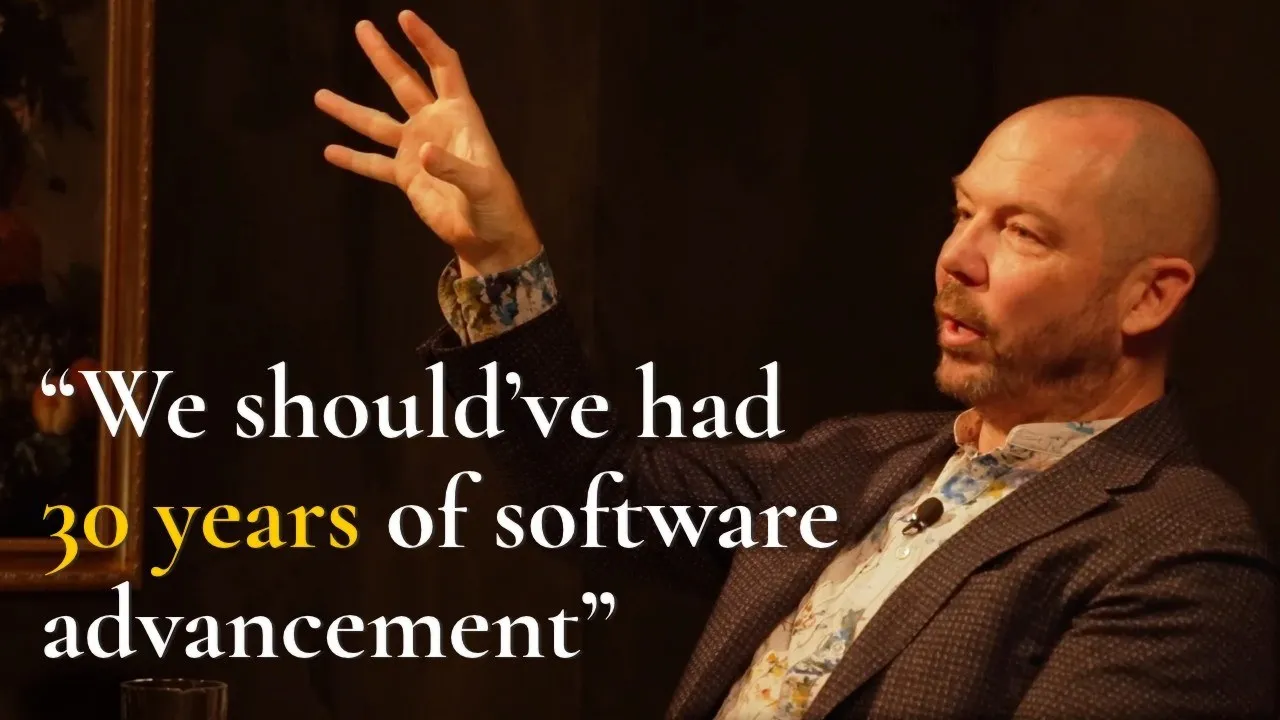
Jonathan Blow’s video drew about 451 points and 651 comments on HN. The most-replied comment says the hard part of software was never coding but deciding what to build and how to model and design it, where LLMs haven’t progressed; another camp says AI coding has only worked well for six months, sucked two years ago and was flaky a year ago, and Claude now nails a lot routinely; a game developer countered that high-quality indie games have clearly multiplied in the last three years. Theo’s popular post on X argued software will get more stable overall thanks to AI, about 3,915 likes. The argument: AI made coding faster, but did it make software better?
2. Nvidia accused of engineering scarcity by funding startups that buy its GPUs#
This hit about 1,009 points on HN; the TechPowerUp article blocks automated reads, so this links the HN thread. The most-replied comment offered the mundane case for ‘circular financing’: with supply bottlenecked, Nvidia knows it will sell everything, so it invests in customers instead of raising prices; others said this was known a year ago; a longtime gamer brought up GameWorks, PhysX and EVGA leaving the market; and someone noted it was third-hand reporting of a WSJ story. The argument: normal business strategy or market manipulation?
3. $11.4M in Nvidia hardware vanishes in transit from California to Texas#
FreightWaves reports that six pallets of Nvidia hardware were picked up in Oakland on August 29 by a truck showing a food transport company’s logo, bound for Fort Worth, and investigators lost it in San Bernardino County; Oakland police are investigating grand theft. The HN thread had about 378 points. One commenter asked whether that’s even a lot; another asked why companies with unlimited money still use regular couriers when gear often ends up in China; someone just said to go find Dominic Toretto. The argument: ordinary cargo theft or part of chip smuggling?
4. A technical vision for the Haskell ecosystem#
The proposal on Haskell Discourse had about 225 points and 152 comments on HN. The most-replied comment asked why terse, strict Haskell isn’t more popular with AI, since a strict language seems ideal for agents iterating; another wished Haskell could target every platform like JavaScript; others pushed back on the ‘do one thing well’ Unix principle, saying Rust is approachable precisely because Cargo does many things. The argument: is a strict type system an advantage or a barrier in the agent era?
Chinese Tech Scene#

1. AI Trends Weekly #294: Google’s new benchmark tests agents on real visual knowledge work#
(iThome): Google DeepMind and Artificial Analysis launched the MKA benchmark, 200 tasks across 83 occupations, each modeling 3-8 hours of expert work; Claude Fable 5.2 leads at 57% and Gemini 4 Carbon is second at 54% at about a sixth of the cost.
2. Claude Code’s /doctor prompt-audit checks CLAUDE.md and skills for outdated prompts#
(INSIDE): The command scans CLAUDE.md, skills, agents and commands for prompts written for older models, dead paths and conflicting rules, reports first and edits only after you confirm; it shipped in v2.1.283 on September 25.
3. Inkitt’s auto-PR system: the model was the easy part#
(InfoQ China): Inkitt orchestrates short-lived agent containers with a state machine, triggered from Slack, Linear or an API, to make small low-risk changes up to a draft PR daily; agents get only short-lived credentials and git diff checks limit which paths can change.
4. From efficiency to capacity: how AI changes small teams (AICon Beijing)#
(InfoQ China): A summary from AICon Beijing: models set the ceiling for agents, while tool integration, runtime, feedback loops and permissions decide production readiness; companies now care about acceptance criteria and risk.
5. What happened at one company after AI coding agents took off#
(PTT Soft_Job): The poster says an internal report compared merged PRs, rollbacks and incidents before and after AI: output went up, and incidents rose by about the same proportion; incident triage can be fully automated, but there are more incidents.
6. Gartner’s 2027 trends: 80% of new software will be disposable by 2030#
(TechOrange): Gartner predicts that with generative AI and vibe coding, 80% of new applications at leading companies will be short-lived ‘disposable’ builds by 2030, partly due to SaaS subscription fatigue.
7. US bank regulators want AI agents that can be traced, audited and shut off#
(TechNews): US bank supervisors want to know whether banks can trace, audit and shut down AI agents, where permission boundaries sit and who approves actions; for now it’s information gathering, not new rules.
8. During Microsoft’s global outage, fax, phone and Bluetooth saved the day#
(TechNews): Microsoft’s outage lasted more than 24 hours; a Taiwanese financial firm confirmed trades by fax and another canceled a bond buyback, while some Japanese agencies asked people to use phone, fax or mail.
9. GovTech Monthly #58: Taiwan’s NCHC adds fine-tuning to TAIWAN AI RAP; the ECB plans digital euro pilots in 2027#
(iThome): NCHC’s TAIWAN AI RAP platform is adding fine-tuning so users can adapt models with their own data, with a proof-of-concept environment planned; the platform started trial operations in 2025.
10. OpenAI reportedly backs three US bills restricting China’s access to AI chips and tools#
(INSIDE): Bloomberg, citing people familiar, says OpenAI confirmed to Congress this week it backs the Chip Security Act, MATCH Act and AI OVERWATCH Act, which gained momentum after the Nvidia turmoil.
11. Appier doubles operating profit and raises guidance again#
(INSIDE): Appier’s Q3 revenue was ¥13.9 billion, up 21.8%, with operating profit of ¥2.1 billion, up 104.7%, a record 61.3% gross margin and a second straight guidance raise.
12. How a grad student used AI to write a review paper#
(sspai): Using an accepted review paper as the example, the author shows how AI, Zotero, Keynote and an AI agent fit into topic selection, literature search, evidence and pre-submission checks, and where human checks are still required.
13. Someone built an agent that runs on iPhone#
(V2EX): The author built an agent app for iPhone that can attach local Linux, remote Linux and sandbox environments to do work; it’s in TestFlight, and commenters report SSH environments not saving.
14. Quanta’s Barry Lam says AI momentum holds despite the Jensen controversy#
(TechNews): Quanta vice chairman Barry Lam said twice he isn’t worried the Jensen controversy will hurt Taiwan’s supply chain, arguing the investment momentum Nvidia built is already in motion.
Open Source Picks#
Today’s new repos lean toward tools and local setups: DeepSeek’s official frontend-only chat demo, a self-hosted media manager, a browser built for agents, and a 190-line DeepSeek V3 teaching implementation. Star counts are checked against the GitHub API today; iOS system tweaking, jailbreak and game recompilation repos are excluded.
1. deepseek-ai/chat-demo#
TypeScript | 1,715 stars
DeepSeek’s official static chat demo with no backend, the browser talks straight to the DeepSeek API; multiple chats, streaming, deep thinking, search, attachments, voice and Markdown/KaTeX/Mermaid, with the API key in localStorage, MIT licensed.
2. apex-compute/ANR#
C++ | 1,812 stars
Apex Compute’s neural rendering toolkit focused on frame generation for games, with super resolution and ray reconstruction coming to beta; includes a recorder to compare against DLSS, FSR and XeSS, and supports NVIDIA, AMD and Steam Deck.
3. HolyArrs/HolyArrs#
Go | 1,177 stars
A self-hosted app for shows, movies and music that replaces six tools, about a 16.1MB download and 95MiB of idle RAM, deployed with Docker Compose, AGPL-3.0.
4. paul-nameless/agweb#
Swift | 152 stars
A macOS browser for coding agents built on WebKit that never steals focus; agents drive it from the shell and a dashboard shows every agent’s tabs live, with idle tabs suspended, MIT licensed.
5. Vaibhaav-Tiwari/deepseek-v3-jax#
Python | 73 stars
DeepSeek V3’s MLA, DeepSeekMoE, aux-loss-free balancing and MTP in 190 lines of pure JAX, trained from scratch on a MacBook Air, with an illustrated write-up, MIT licensed.
Watch & Listen#
1. Theo: It’s so much worse than I thought#
Channel: Theo (t3.gg)

Why it matters to you: When you pick a model for your agent, latency and cache reliability matter beyond benchmarks, and this is a very concrete hands-on complaint.
- Takeaway 1: He says his data shows Gemini 4 Carbon running about 5x slower in day-to-day work, and that many Artificial Analysis tasks are single-turn, which falls apart in multi-turn agent work
- Takeaway 2: He says that after writing to the cache there’s about a 30% chance the next read misses it, sometimes reading a cache from 30 minutes ago or failing outright
- Takeaway 3: He’s also unhappy that Google puts reasoning effort in the model name instead of a separate field like everyone else, which broke their analytics
2. Dwarkesh Patel: Recursive self-improvement has started#
Channel: Dwarkesh Patel
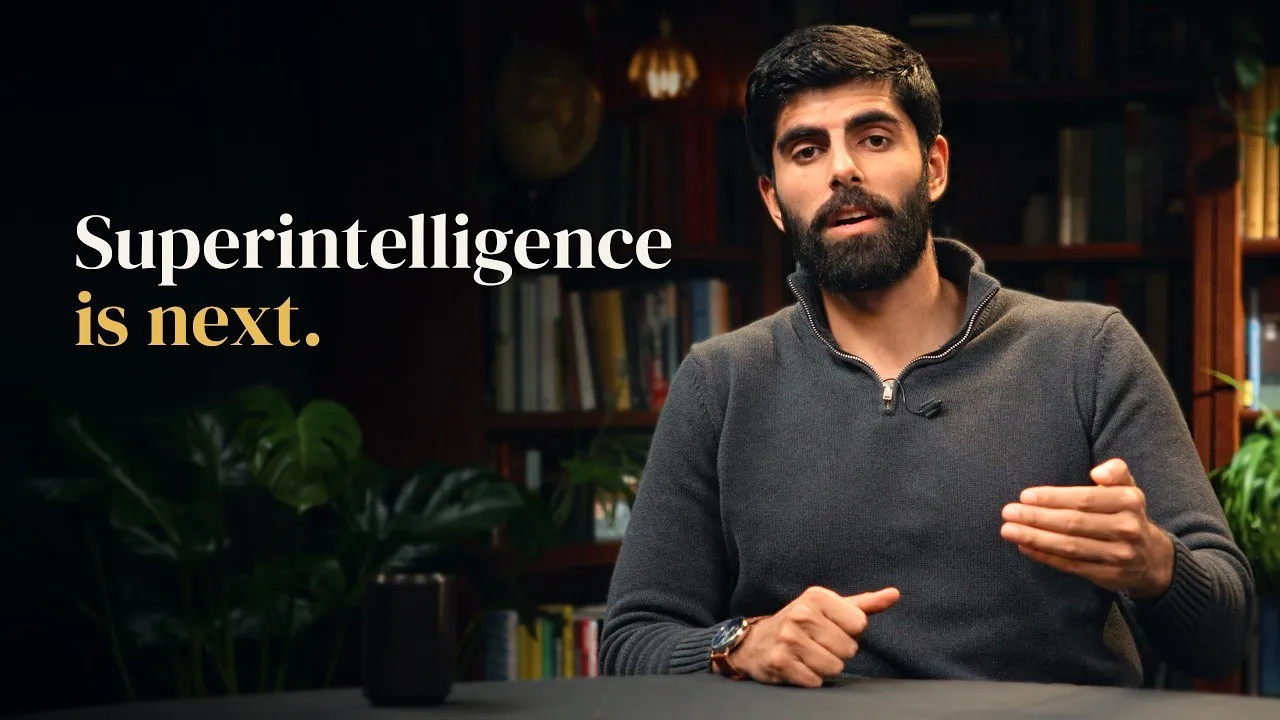
Why it matters to you: You keep hearing that AI research will accelerate itself; here Dwarkesh explains why he changed his mind so much in three months.
- Takeaway 1: He says early this year he’d have guessed superintelligence was at least a decade out, and over three months he moved to thinking AIs as good as the best humans at AI research are a couple of years or even months away
- Takeaway 2: He cites METR, which spent three months inside Anthropic and concluded Anthropic’s rate of AI progress on well-scoped tasks is 2x what it was a year ago
- Takeaway 3: He uses the Transformer as an example: none of its core pieces were a surprise, so why wasn’t it invented sooner?
3. 20VC: The $7B startup building AI chips to challenge Nvidia#
Channel: 20VC

Why it matters to you: With so much Nvidia news today, this episode covers inference chips and the neocloud business from a challenger’s side.
- Takeaway 1: Fractile just raised a $720 million Series C at a $7 billion valuation, with Thrive, Founders Fund, Lightspeed and Redpoint
- Takeaway 2: Founder Walter Goodwin says we’ll spend far more on running models in ten years than today, and frontier intelligence isn’t commoditizing yet
- Takeaway 3: He points to Fluidstack, the first neocloud to step away from Nvidia and deploy Google TPUs, as having an extraordinary year
Today’s Take#
First today: permissions. I’m rechecking the read rules on every Supabase and Firebase table, especially migrations an AI wrote, and treating anything the anonymous key can read as already public.
Next, a key inventory. The Cursor story reminded me how many tokens I’ve handed to outside services, so I’m listing them today and shrinking scopes or pinning sources where I can.
Project Zero shrinking its deadline to 30 days is a reminder that my update speed needs to keep up. I’m getting a forced-update threshold and Remote Config switches ready.
I’ll try Claude Code Projects on a change that spans a Flutter app and its backend, but I’ll still read the PRs myself. The No AI Slop line about fixing the system when a mistake shows up twice is going straight into a skill.
Last, what the FAA and Revolut taught: no big changes on Friday afternoon, and alert when failover itself is degraded. Both go on my deploy checklist today.