Claude and Microsoft 365 went down on the same day, and ChatGPT can now check out for you
Claude sign-ins broke for two hours, Microsoft 365 was down for about 18 hours and the FAA grounded every US flight; OpenAI launched ChatGPT Wallet so agents can pay for you; GitHub shows how to write one skill for every agent; Edge0 fits a 145B model on a laptop

Contents55
Spend 1% of your day keeping up with tech.
Quote of the Day#
“Self-verification is not verification.” — The GitHub Blog, practical guide to agent skills (source)
“The workbooks not only contain dozens of anticipations of results not known until the 70s and 80s, but they also contain 14 themes in logic that have not been pursued.” — Jan von Plato, Finnish logician, on Gödel’s notebooks (source)
“I’m finding Gemini 4’s pricing really confusing.” — Simon Willison, llm-gemini 0.37 release notes (source)
Today’s Theme#
Yesterday was outage day. In the Taipei evening, Claude sign-ins broke and claude.ai and Claude Code were down together for two hours. Microsoft 365 was out from one day into the next, taking Outlook, Teams and Copilot with it. Then the FAA grounded every flight in the US over a communications equipment problem.
There’s no evidence the three are connected, but together they hit home. I write code with agents and my team talks over cloud email, so when those stop I can do maybe half my job. I’m keeping both Cursor and Codex working so I can switch when one goes down.
The other thread is agents touching money. OpenAI launched ChatGPT Wallet: the agent picks the product, you confirm with Face ID, it checks out, and the merchant never sees your card number. Sierra shipped a protocol the same day that lets personal agents sign in and order at businesses, and it’s on by default for every Shopify merchant.
If you build with agents, read GitHub’s skills guide. It matches what I’ve learned: keep one SKILL.md as the source, generate the Claude Code, Cursor and Copilot versions from it, and run a separate verifier that never sees the original agent’s own explanation.
Local AI took a big step too. Edge0 got a 145B model running on a laptop, and llama.cpp hit 1.0. The more often the cloud goes down, the more a model that runs on the device is worth.
Must Read#
- Claude sign-ins broke for two hours, taking down claude.ai, Claude Code and the Console
- Microsoft 365 was down for about 18 hours, taking Outlook, Teams, Copilot and Intune with it
- ChatGPT Wallet launches: agents pick products and check out for you, paying with a token so merchants never see your card
- GitHub’s practical guide to agent skills: one SKILL.md for Claude Code, Cursor and Copilot
- Edge0-145B goes open source: a 145B model on a laptop with about 29GB peak memory and 80+ tokens per second
- llama.cpp and ggml ship v1.0.0 and switch to semantic versioning, bumping the major version on breaking API changes
- DeepSeek opens its app’s search, file reading, link reading and voice through the API, with tools billed per use
- Anthropic on building AI safety evals: grade with yes/no criteria and write the analysis plan before you look
- Cloudflare launches Spend Management: Workers pause automatically at your limit, so no surprise bills
- Vercel Workflow SDK 5: up to 25x lower latency and every payload encrypted by default, built for agents
- LangChain raises a $300 million Series C at a $3 billion valuation, more than doubling in a year
- Claude helped read Gödel’s 1,009 pages of shorthand notes and surfaced hundreds of unknown theorems
1. Claude sign-ins broke for two hours, taking down claude.ai, Claude Code and the Console#
short read · service status · Claude Status

Why it matters to you: The agent you code with every day can lock you out completely, so your workflow needs a fallback.
Summary: Anthropic’s status page shows it started investigating a sign-in problem for claude.ai and Claude Code at 17:58 Taipei time on November 13. The incident covered claude.ai, the Claude Console (platform.claude.com), Claude Code and Claude Cowork, and was marked major. A fix went out at 19:05, and at 19:58 claude.ai and Claude Cowork were declared recovered, about two hours in total. The status page gives no cause. Microsoft 365 was also down that day, and people on HN asked whether the two were related, but nothing official links them.
Elevated errors on claude.ai, Claude Code, and platform.claude.comClaude's Status Page - Elevated errors on claude.ai, Claude Code, and platform.claude.com.status.claude.com- Takeaway 1: People on HN reported sessions suddenly asking them to sign in again and then failing with
OAuth request failed; others noted a two-hour fix beats Outlook being down all day - Takeaway 2: The status page only lists the timeline with no postmortem; you can subscribe to email or text alerts there if you want to hear first
Community: The HN thread had about 478 points and 377 comments. The most-replied comment said that depending on your job, this is either the adult version of a snow day or the most stress in a long time, and someone joked about whether anyone still remembers the git command to push.
Why I care: I’ll keep both Cursor and Codex ready so I can switch when one goes down, and keep my important skills and rules in the repo instead of tied to one tool.
2. Microsoft 365 was down for about 18 hours, taking Outlook, Teams, Copilot and Intune with it#
medium read · cloud outage · TechCrunch
Why it matters to you: When email, meetings and device management all sit on one cloud, a single failure can stop a whole day.
Summary: TechCrunch reports the trouble started Thursday as an Outlook and Teams outage flagged for the US and the Americas, then spread worldwide into a full outage of consumer and business email, files and documents. Copilot and Defender went down, admins couldn’t reach their Intune dashboards, and some users couldn’t connect to their cloud Windows PCs. Microsoft only said “a large number of servers” were “unexpectedly unavailable” and is still investigating. Doug Madory of Kentik said on Bluesky that traffic started returning after about 18 hours. Microsoft says there’s no evidence of malicious activity and that it isn’t related to cyber or AI and agents. The last major incident was in September, caused by a core authentication configuration.
Microsoft's latest email outage turned into a full-blown global cloud crisis | TechCrunchMicrosoft's daylong outage began with Outlook and Teams and ended up taking much of the company's cloud services offline. Microsoft says it's gradually restoring service.techcrunch.com- Takeaway 1: MSFT365Status admitted on X that the changes it applied weren’t taking as expected, a post seen about 9.67 million times
- Takeaway 2: Charles Lamanna, Microsoft’s EVP for Copilot, agents and platform, said the teams are reviewing what happened and how to prevent it
Community: The HN thread had about 456 points. The most-replied comment asked how one of the most valuable companies on earth can have a core service down this long, and another said nearly every UK government body and business runs on Outlook, so the day was basically a holiday. LibreOffice took a jab too (see community item 2).
Why I care: I’ll keep account recovery email and 2FA backup codes with different providers, avoid relying on one vendor for my app’s support inbox, and keep at least one backup channel for team chat.
3. ChatGPT Wallet launches: agents pick products and check out for you, paying with a token so merchants never see your card#
medium read · agent payments · TechCrunch
Why it matters to you: Agents can now pay on a user’s behalf, so your site may soon get orders that no human placed directly.
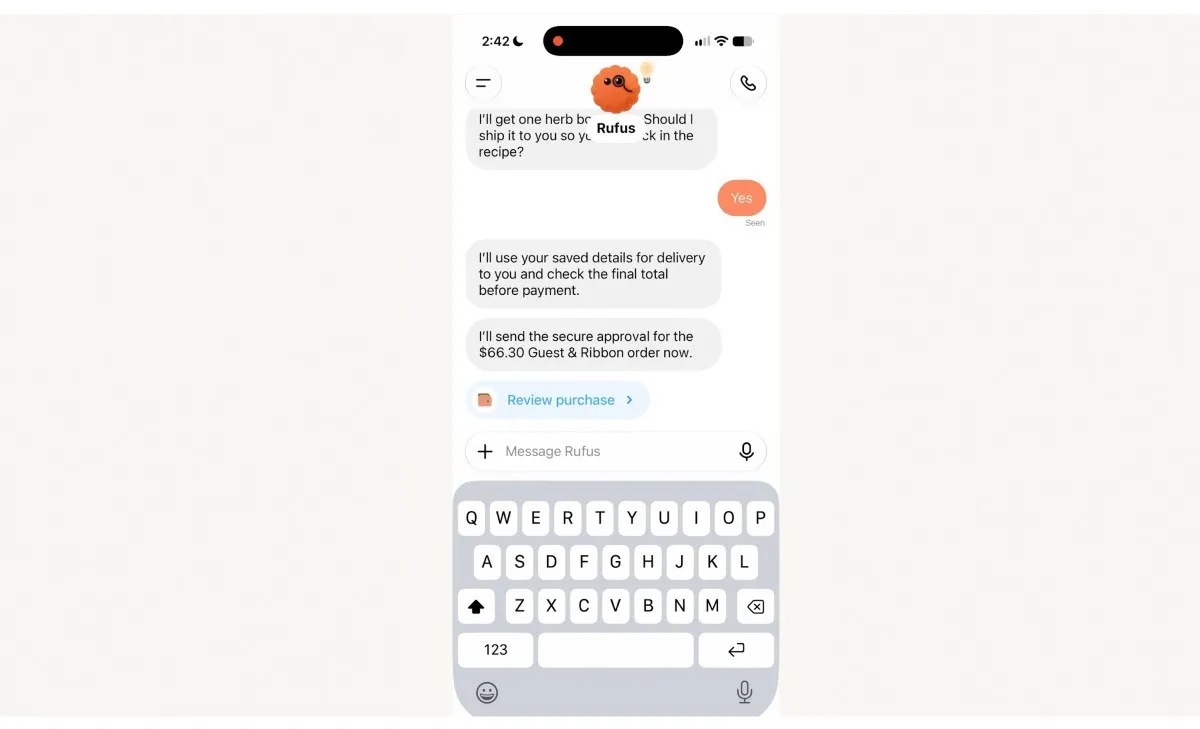
Summary: OpenAI launched ChatGPT Wallet on Friday, letting its agents, called dots, help you decide what to buy and then complete the purchase. It starts with a limited number of US ChatGPT Pro subscribers aged 18+ with a US-issued Visa, Mastercard or American Express. Before checkout you see the items, the total and the card, then approve with Face ID or a fingerprint. Wallet charges a payment token instead of your real card number, so neither the dot nor the merchant gets your card details; the merchant only receives the shipping address and contact info it needs. Card rewards and dispute protections still apply. OpenAI also published a Commerce Partner Playbook for retailers that want to support agent shoppers.
ChatGPT's new Wallet lets AI agents shop and check out for you | TechCrunchChatGPT Wallet lets AI agents shop and check out on users' behalf, starting with a limited rollout to U.S. Pro subscribers.techcrunch.com- Takeaway 1: OpenAI plans to let users set spending limits, categories or time windows so they can pre-approve purchases the agent handles on its own
- Takeaway 2: Amazon, the largest retailer blocking AI agents, wants users on its own Alexa instead; TechCrunch adds that DoorDash and Uber report few agent orders so far, while Meta’s Muse, with over 10 million users, has seen AI-assisted shopping become a top activity
Community: The Verge covered the launch too, and the HN thread is still small.
Why I care: My apps sell through store in-app purchases, so agents won’t order directly anytime soon, but I’ll start watching how to recognize agent traffic on web checkout, along with Sierra’s Poppy protocol (see Builder Radar).
4. GitHub’s practical guide to agent skills: one SKILL.md for Claude Code, Cursor and Copilot#
medium read · AI tools · GitHub Blog

Why it matters to you: If you keep re-explaining the same task to an agent, it should be a skill, and this post shows how to write one that survives switching tools.
Summary: The GitHub Blog turned a Universe 2026 session into a guide. A skill is a versioned directory built around a SKILL.md that says when and how to do a repeatable task. You can share it across agents, but the environment still supplies the tools, credentials and permissions: a skill that explains how to query a database doesn’t grant access to it. The Proof Agent example rests on one rule, self-verification is not verification: a separate verifier gets the original request and the code changes but not the coding agent’s own assessment, returns PASS, FAIL or PARTIAL, and must cite evidence in the changed files. The Data Forge example keeps project names, schemas and conventions in one manifest, with a human checkpoint at each of seven phases.
- Takeaway 1: To support several clients, keep
skills/*/SKILL.mdas the single source and let a packaging script generate.claude-plugin/plugin.jsonfor Claude Code,.cursor-plugin/plugin.jsonfor Cursor and.github/agents/*.agent.mdfor Copilot, with a CI check mode to catch drift - Takeaway 2: Skills fit bounded, repeatable work such as checklists, releases and migrations; if a workflow needs a stable interface, shared state, an audit trail or permissions enforced outside the model, build an application instead
Why I care: My skills are scattered across tools, so I’ll consolidate them into one source and generate the Cursor and Claude Code versions, and add an independent verifier to store submission and release flows.
5. Edge0-145B goes open source: a 145B model on a laptop with about 29GB peak memory and 80+ tokens per second#
long read · local AI · Edge0 blog

Why it matters to you: A near-frontier model running locally means some AI features can skip API fees and keep data on the device.
Summary: Edge0 open-sourced Edge0-145B and Edge0-120B along with its inference framework and deployment tools, calling it the first open-source on-device model with 145 billion parameters. Its numbers: about 29GB peak memory and more than 80 tokens per second on a compatible laptop such as a MacBook Pro. The trick is having each group of 64 sparse experts share two large matrices while each expert keeps a small set of its own parameters, plus CPU and GPU working together and speculative decoding. On benchmarks it scores 64.6 on DeepSWE 1.1 against 58.7 for Qwen3.8-Flash-Next, 86.52 on Terminal-Bench 2.1 against Claude’s 78.2, and 90.4 on GPQA-Diamond against 91.3 for Claude-Opus-4.6 (Max). The earlier Edge0-35B runs at 37+ tokens per second on an iPhone 18 Pro Max using about 2.5GB of memory.
- Takeaway 1: The post says most on-device models stayed under 10B parameters before September 2026; Apple Intelligence’s on-device model was about 3B and Gemini Nano came in 1.8B and 3.25B
- Takeaway 2: Edge0 also notes local inference has no cloud token fees but hardware and power still cost money, and the comparisons apply only to the named models and evaluations
Community: The HN thread had about 336 points and 102 comments. Some asked whether normal people even own a laptop that can run it, some suspected it’s a quantized Flash model under a new name, and others were impressed by the Blender demos.
Why I care: The phone-sized model is the 35B one, so I’ll test latency and battery on small offline features like summaries before deciding which AI features in my apps belong on the device.
6. llama.cpp and ggml ship v1.0.0 and switch to semantic versioning, bumping the major version on breaking API changes#
short read · local AI · Hugging Face blog
Why it matters to you: A lot of local AI apps and tools run on llama.cpp, and from now on the version number tells you whether an upgrade will break things.
Summary: The llama.cpp team announced libraries v1.0.0 on the Hugging Face blog. Three and a half years in, many downstream apps depend on it, so llama.cpp and ggml will now bump the major version on any API or ABI incompatibility, and every ggml-org project follows semantic versioning: major for breaking changes, minor for backward-compatible features, backend updates and new model support, and patch for fixes. It supports more than 150 model architecture variants and all mainstream speculative decoding methods, and each ggml backend can be built as a dynamic library and loaded at runtime. The team says it will bring LLMs into development thoughtfully, with code quality and control of the architecture staying the top priority.
- Takeaway 1: NVIDIA, AMD, Qualcomm, Arm, IBM and Intel provide hardware for CI, and HF Buckets and HF Jobs add capacity so every change landing on master gets verified
- Takeaway 2: Hugging Face also ships Llama desktop apps for macOS and Windows, and a commenter asked why there’s no Linux version
Community: The HN thread is just getting started at about 20 points.
Why I care: For Flutter packages that bind llama.cpp, I’ll pin to 1.x and schedule upgrades only when the major version changes.
7. DeepSeek opens its app’s search, file reading, link reading and voice through the API, with tools billed per use#
short read · AI APIs · DeepSeek docs
Why it matters to you: If you want AI in your app to search, read PDFs and talk, one API now covers it at a low price.
Summary: DeepSeek announced in its API docs on November 13 that V4.1-Flash (deepseek-flash) supports built-in tools across Messages, Responses and Chat Completions, with tool calls and context assembly handled server-side: web and image search with citations, search during multi-step reasoning in thinking mode, parsing PDFs, Office files and images, and fetching links found in user messages. deepseek_web_search turns on search and deepseek_read_url turns on link reading. Search, Fetch, OCR, ASR and TTS are also available as standalone APIs. The pricing page lists $0.75 per 1,000 searches or fetches, $0.225 per 1,000 pages for file parsing and OCR, $0.45 per 10,000 characters for TTS and $0.116 per audio hour for ASR, with speech at 50% off for a limited time.
- Takeaway 1: The notice says public-facing apps must enable safety checks, and developers remain responsible for moderation, model registration and labeling AI-generated content
- Takeaway 2: Tool fees stack on top of token charges, and thinking-mode search can call tools several times, so estimate the bill separately
Community: DeepSeek’s launch post on X had about 6,747 likes and nearly 500,000 views.
Why I care: Data goes to DeepSeek’s servers, so I won’t use it for anything touching personal data, but for summaries of public data I’ll price it against Gemini.
8. Anthropic on building AI safety evals: grade with yes/no criteria and write the analysis plan before you look#
long read · AI safety · Anthropic research

Why it matters to you: If your app uses AI to judge or moderate, how you design the eval decides whether you can trust the score.
Summary: Anthropic says calling a model “safer than its predecessor” means it scored better on a set of evals, and a safety claim is only as sound as the eval behind it. Borrowing from psychology’s replication crisis a decade ago, it offers recommendations: build teams with both methods experts and domain experts; run evals in a sandbox with no internet and real-time monitoring, since safeguards are often disabled, and Anthropic itself paused many internet-connected evals after its own incidents; and start with the question you want answered, because most evals show that one model scored differently, not why. Keep grading simple and objective with a set of yes/no criteria instead of one overall score, and validate the grader against human labels until it agrees with experts about as often as experts agree with each other.
- Takeaway 1: Write down the main metrics and analysis plan before seeing results, known as preregistration, so you don’t pick favorable comparisons after the fact
- Takeaway 2: Report the configuration so runs can be reproduced, and don’t compare scores when several settings changed at once
Community: Anthropic’s post on X had about 1,268 likes.
Why I care: When my apps use a model to classify things, I’ll do the same: yes/no criteria, check against a small hand-labeled set, then decide whether to ship.
9. Cloudflare launches Spend Management: Workers pause automatically at your limit, so no surprise bills#
medium read · cloud costs · Cloudflare blog
Why it matters to you: The scariest part of serverless is waking up to a huge bill, and this lets you set a hard cap.
Summary: Cloudflare says spend controls have long been among the most requested features from the more than 10 million developers on its platform. Paid plans already had usage notifications and budget alerts, but informing isn’t controlling. Spend Management is now in beta for every pay-as-you-go customer, starting with Workers and Durable Objects: you set a spending limit, alert thresholds and a notification email, and when the limit hits, a blocking policy pauses the product. Only billable customer-code invocations pause, such as Workers Cron Triggers and Queue consumers, while static assets keep serving. The dashboard shows current-cycle spend in near real time (under 10 minutes) plus an audit log, and you can configure it with the cf CLI or REST API.
- Takeaway 1: The billing cycle starts when the paid subscription began, not on the calendar month; a subscription starting October 10 runs October 10 to November 10
- Takeaway 2: AI Gateway already supports per-user and per-model budgets, so you can pair it with Spend Management to cap both compute and inference costs
Community: The HN thread is still quiet.
Why I care: My site runs on Cloudflare, so I’m setting the Workers cap today, and on Firebase I’ll go past budget alerts and work out how to stop automatically when spend goes over.
10. Vercel Workflow SDK 5: up to 25x lower latency and every payload encrypted by default, built for agents#
medium read · backend · Vercel blog
Why it matters to you: Long-running agents and background jobs have to survive crashes and deploys, and this release adds speed and data protection together.
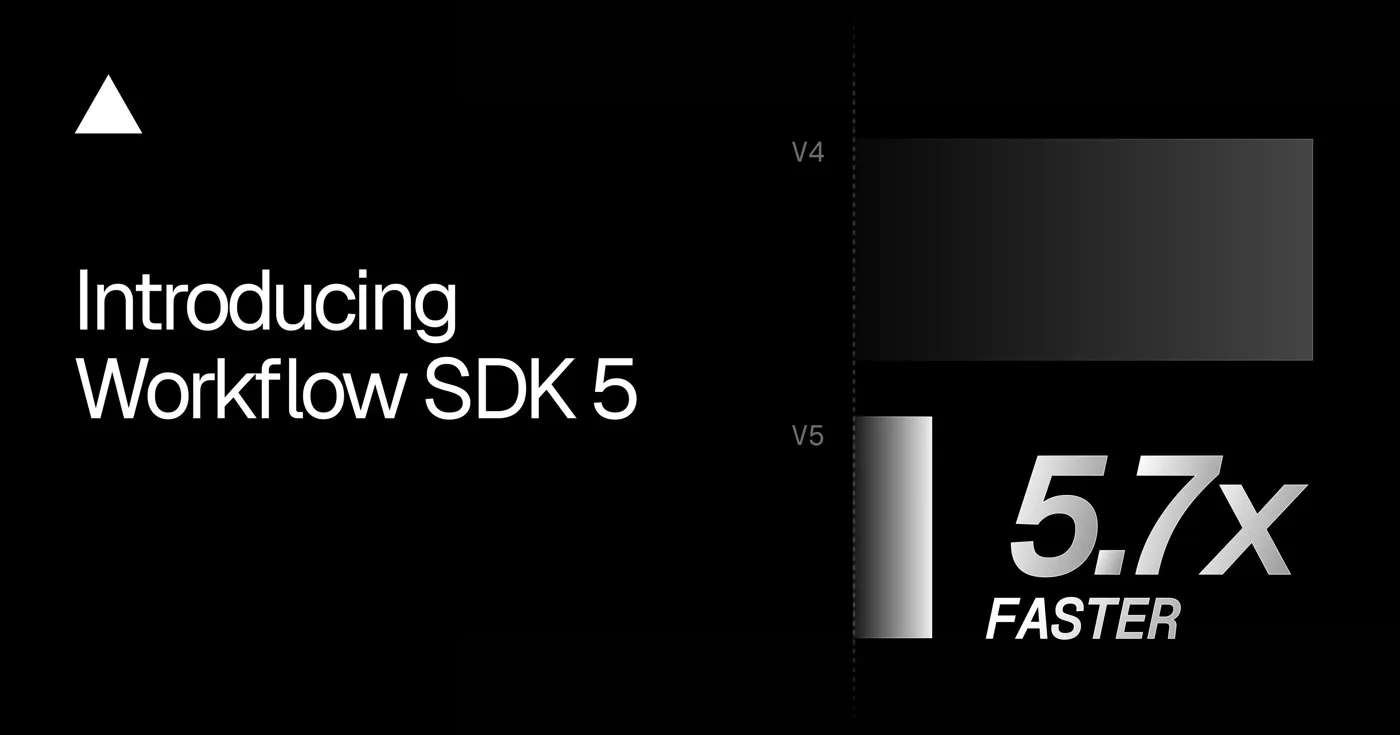
Summary: Vercel says Workflow SDK has run more than 4 billion steps and 700 million runs, mostly for two things: traditional automation, and agents and harnesses that are expensive and long-running. v5 encrypts every workflow and step input and output, hook payload and stream with AES-256-GCM using a unique key per run, so any backend only sees ciphertext; on Vercel it needs no code changes, and payloads decrypt in your browser or terminal with every request logged. In v4 each step took two queue hops; v5 rewrote the engine to cut extra queue hops and network trips, with measured latency and overhead improving 1.6x to 25x. A new region option lets run data live outside iad1, where all v4 runs were stored, so a disruption in one region doesn’t block new runs in healthy ones.
- Takeaway 1: With
experimental_retention: 0, inputs, outputs and stream contents are deleted as soon as a run completes or fails, keeping only metadata - Takeaway 2: New run attributes let you attach searchable context such as an order ID, but they’re plaintext, so no secrets
Community: Vercel’s post on X had about 260 likes.
Why I care: My backend isn’t on Vercel, but a key per run and deleting payloads when done is a good check on whether my own background jobs keep user data too long.
11. LangChain raises a $300 million Series C at a $3 billion valuation, more than doubling in a year#
short read · AI industry · TechCrunch

Why it matters to you: Agent management platforms are still pulling in big money, which says companies care a lot about not being locked into one model or cloud.
Summary: LangChain raised a $300 million Series C at a $3 billion valuation led by CapitalG, with GIC, DFJ Growth, IVP and Sapphire Ventures participating, more than double its $1.25 billion valuation about a year ago. It began in 2022 as an open source project handling what early LLMs struggled with, like searching the web, calling APIs and working with databases. Once frontier labs’ harnesses could do that, it moved to agent management. Its pitch is letting businesses own their own intelligence: LangSmith doesn’t lock users into a model, cloud or ecosystem. LangSmith now has 7,000 customers, including Harvey, Rippling and Clay, plus Nvidia, Toyota and Salesforce.
- Takeaway 1: INSIDE’s Chinese report quotes co-founder Harrison Chase saying agent behavior is the hardest part to control, and everything they build is meant to make that easier
- Takeaway 2: TechCrunch notes plenty of startups make similar pitches, such as newcomer Mintive
Why I care: My agent workflows run on Cursor and Claude Code, so I won’t switch to LangSmith, but not locking into one model matches how I keep my apps’ model provider swappable.
12. Claude helped read Gödel’s 1,009 pages of shorthand notes and surfaced hundreds of unknown theorems#
medium read · AI research · The Guardian

Why it matters to you: AI can now read obscure material fast enough to compress years of a researcher’s work into days.
Summary: The Guardian reports that Finnish logician Jan von Plato has led a project at Helsinki University since 2017 to understand 16 notebooks Gödel wrote in the early 1940s: 1,009 pages, mostly in Gabelsberger, a German shorthand already obsolete when Gödel used it. Progress ran about a page a week until September, when von Plato enlisted Claude, which produced a digest of the whole material within days showing Gödel had proved hundreds of theorems nobody knew about. Von Plato says the notebooks anticipate dozens of results not found until the 1970s and 80s and contain 14 themes in logic nobody has pursued.
- Takeaway 1: Von Plato started the project because he was facing mandatory retirement and wanted to make himself indispensable
- Takeaway 2: Gödel’s 1931 incompleteness theorems inspired Turing’s 1936 paper that began the theory of modern computation
Community: The HN thread had about 273 points and 81 comments. One commenter called it a concrete example of someone making themselves obsolete with AI, another pointed out Gödel was a perfectionist so the notes may not be finished new theorems, and someone found a related slide deck.
Why I care: I’ll use the same move on old code and docs I can’t parse: let AI map the whole thing first, then verify the key parts myself.
More to Read#

- Uber confirms hackers stole thousands of drivers’ license details, traced to the Fireworks AI breach: Why it matters to you: Uber told several state attorneys general that credentials stolen in the October Fireworks AI breach were used to reach Uber data, exposing driver’s licenses of 2,567 people in Massachusetts and 3,430 in South Carolina alone; before handing data to an AI vendor, think about the blast radius if they get hacked.
- Cloudflare open-sources Kitesurf, its browser engine for AI agents: Why it matters to you: Kitesurf runs entirely on Workers, parsing HTML, running JavaScript and taking screenshots without a browser container, supports CDP so Puppeteer can connect, and is now open source under Apache 2.0.
- Cloudflare on AI penetration testing orchestrators: 50+ framework families in three days: Why it matters to you: Cloudflare saw more than 50 framework families scanning its customers in three days, from thousands of IPs and growing daily, so any exposed API or admin panel now faces AI-automated attack volume.
- GitHub availability report for October: 140 of 151 services now on Azure: Why it matters to you: GitHub says that as of November 9, 140 of 151 production services run in Azure Central US and migrated-service traffic is up 82% since March; if GitHub outages keep blocking you, this is how they’re reviewing them.
- Research says China’s strongest open-weight models were trained on export-banned Nvidia chips: Why it matters to you: A new research effort claims China’s leading open-weight models were trained on Blackwell GPUs the US banned from export, which could shape future controls and the model APIs you rely on.
- ElevenLabs’ new app combines meeting notes and dictation for teams: Why it matters to you: ElevenLabs, valued at $22 billion, released ElevenAI in preview, combining meeting notes, dictation and agent integration to take on Granola and Wispr Flow.
- Contra “Glue work considered harmful”: Why it matters to you: The author pushes back on Sean Goedecke’s view that companies skip rewarding glue work because they want you shipping features, calling it settling for mediocrity, a good read if you do the connecting, docs and process work on a team.
- How not to build a music player: Why it matters to you: After a nationwide internet shutdown showed the author online music can’t be relied on, he wrote his own offline player, AMP, built around line-synced lyrics, useful thinking for offline-first apps.
- Terminal borders that don’t cost a cell: Why it matters to you: The Ratatui maintainer proposes a terminal protocol that draws thin lines on cell edges so borders stop eating a whole cell, worth a look if you build TUIs.
- Latent Space: ArtCraft cloned Photoshop and now wants to rebuild everything: Why it matters to you: ArtCraft has released 17 open source versions of popular tools, starting with PhotoCraft, a Photoshop alternative written from scratch in Rust, plus PdfCraft as an Acrobat clone.
- XYBench: helping with the problem behind the question: Why it matters to you: Ai2 released XYBench, 8,000+ questions testing whether assistants catch the real problem behind a misguided question, and it won Best Resource Paper at EMNLP 2026.
- Simon Willison: llm-gemini 0.37 and confusing Gemini 4 pricing: Why it matters to you: Simon notes Hydrogen is only 25% cheaper than Carbon and Argon, which cost the same and both double in price on December 1, so watch your bill if you use the Gemini API.
- The need for at least a third option: Why it matters to you: The author started building for Ubuntu Touch and argues users and developers keep losing control over their devices and apps, so we need a viable mobile OS beyond Android and iOS.
- Build a robot pick-and-place simulation with SimReady assets: Why it matters to you: NVIDIA walks through a beverage-can pick-and-place in Isaac Sim with a UR17G arm and Robotiq gripper, agent-generated controls and assets from SimReady Central on Hugging Face.
- SO-Arena: benchmarking the reliability of system one models: Why it matters to you: This paper tests system one models across 11 domains and finds strong task scores don’t guarantee stable decisions or noticing when the right option is missing.
Also Worth a Look#
- 2026.46: The End of Jensen - Stratechery (Ben Thompson’s weekly wrap on Nvidia)
- Sharp Tech on Video: Nvidia After Jensen Huang - Stratechery (Sharp Tech’s first video episode)
- The unfolding Jensen Huang scandal: a timeline - TechCrunch (a timeline of the Jensen Huang story)
- Israel’s VCs see opportunity for challengers in Nvidia’s turmoil - TechCrunch (Israeli VCs bet on Nvidia challengers)
- Jensen Huang was reckless with the environment, too - The Verge (The Verge on Nvidia’s environmental cost)
- This young startup wants to power floating data centers with the ocean’s heat - TechCrunch (floating data centers powered by ocean heat)
Show all sources (12 more)Show fewer
- [AINews] D-Day (Decision Models Day) - Latent Space (a roundup of decision models day)
- The Definitive Fine-Tuning Guide for 3D Generation Models - Hugging Face (a fine-tuning guide for 3D generation models)
- Running a law firm on Free software (2026 edition) - decoded.legal (running a law firm on free software)
- IceWM - ice-wm.org (the veteran lightweight window manager hit the HN front page)
- Doomsday: Friday, 13 November, A.D. 2026 (1960) - Science (a 1960 paper predicting population doomsday on this date)
- The new Apple TV has a YouTube problem - The Verge (the new Apple TV’s YouTube error)
- Microsoft’s massive Outlook outage might be over - The Verge (the Outlook outage may be over)
- TLDR AI: Gemini 4 Hydrogen, self-hosted Claude agents, Replit agent commerce - TLDR AI (TLDR AI for November 13)
- After 600 experiments, here’s what I discovered about JEPA world models - haddyalchaer.com (notes after 600 JEPA world model experiments)
- The smallest version of Camp Snap’s retro digital camcorder fits on your keychain - The Verge (a retro camcorder that fits on a keychain)
- You can adjust the position of the trackball on Keychron’s new wireless mouse - The Verge (a Keychron mouse with an adjustable trackball)
- How Amplitude ships product improvements in 1–2 days with OpenAI - OpenAI (how Amplitude ships improvements in one to two days)
Builder Radar#
1. Flutter’s desktop windowing API, led by Canonical, is ready to try on the main channel#
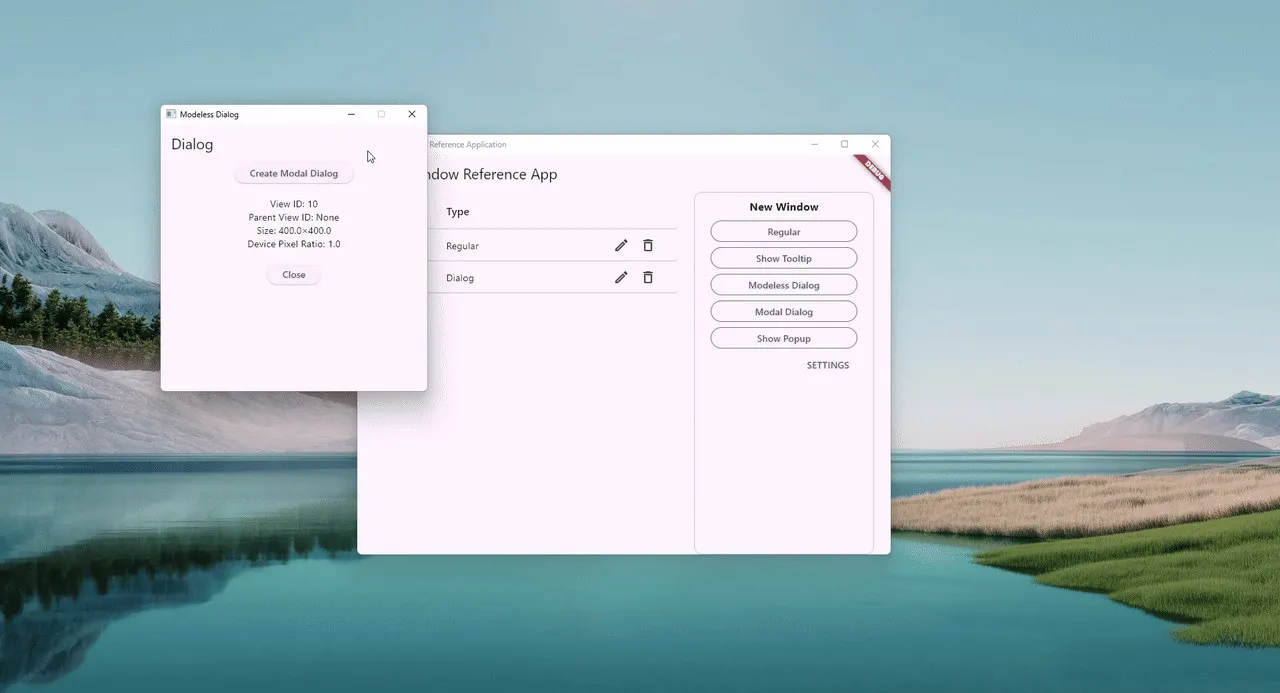
FlutterDev promoted the experimental desktop windowing API on X, about 70 likes. Canonical leads the design and implementation with Google reviewing, and it defines five window types: regular, dialog, tooltip, popup and satellite windows that follow their parent, arranged in a hierarchy. You create a WindowController and render it with a Window widget. It’s main channel only and needs flutter config --enable-windowing; Flutter 3.44 already makes showDialog open a separate child window on supported platforms.
What it means for your app: If you build Flutter desktop apps, you can start trying multiple windows on a branch, but the team says it isn’t production-ready, so keep it out of shipping builds.
2. Firebase AI Logic supports Gemini 4 with App Check now enforced#
Firebase said on X you can now call Gemini 4 client-side through Firebase AI Logic with App Check enforced. The models page lists gemini-4-hydrogen as stable from November 12 and gemini-4-carbon from November 10. The App Check docs say App Check enforcement became required for Firebase AI Logic on November 2, blocking older app versions without it, with a delay possible until January 21, 2027; the same page warns that from December 1 the Gemini Developer API will route Gemini 2.5 Flash and Pro requests to newer models, which may break things.
What it means for your app: If your Flutter app uses AI Logic, confirm every shipped version has App Check, manage the model name through Remote Config, and move off 2.5 calls before December 1.
3. PostHog Replay Vision watches session replays for you#
PostHog says Replay Vision watches session replays and summarizes the findings, and since August 9,488 organizations have pointed 20,097 scanners at their recordings. The post had about 22 likes.
What it means for your app: If you record lots of replays but never watch them, set up a scanner that looks for stuck users and error screens and just read the weekly summary.
4. Expo: four things your agent needs before it can run workflows on your Expo account#
Expo posted a video where @buildwithtori walks through the one-time setup on a real project: GitHub, a robot user, your agent and a GitHub token. The post had about 15 likes.
What it means for your app: Give agents a robot user and a least-privilege token instead of your own account, and the same rule applies to Codemagic or Firebase.
5. Sierra releases Poppy 1.0, an open protocol for personal agents to sign in and act at businesses#
Sierra released Personal Agent Protocol (Poppy) 1.0, letting personal AI agents discover, authenticate and act for users at participating businesses. It’s on for everyone using Meta’s Muse agent, enabled for every Shopify merchant, and backed by more than 100 design partners. The post had about 280 likes.
What it means for your app: If you sell on Shopify, your store can already take agent orders, and together with ChatGPT Wallet in must-read 3, agent shopping became real this week.
6. Cognition launches Devin Apps, private web apps running on Devin’s cloud computer#
Cognition introduced Devin Apps, private, secure and shareable web apps that Devin builds and runs on its own cloud computer, aimed at internal tools, preview deployments and extending Devin itself. The post had about 563 likes.
What it means for your app: Small ops dashboards and metrics pages can become a private link an agent builds for you, no hosting needed, but think through data access first.
What the Community Is Arguing About#

1. The FAA grounds every US flight, and people wonder if it’s another system failure#
TechCrunch reports the FAA grounded all US flights Friday afternoon over “extraordinary circumstances”; its site cited an equipment outage and a spokesperson pointed to communication issues across multiple air route traffic control centers, while the Homeland Security secretary said there’s no sign of a nefarious act. The HN thread had about 691 points. One commenter was on a plane whose captain didn’t know what it meant, another linked news of the FAA’s new AI tool for controllers, and another said Microsoft, then Anthropic, now air traffic control can’t be coincidence. The argument: three major outages on one day, coincidence or a shared cause, with no evidence so far for the latter.
2. LibreOffice jabs at the Microsoft 365 outage, and people argue whether open source office software is good enough#
LibreOffice posted one line on X, “LibreOffice actually works 365 days a year,” drawing about 66,269 likes and 1.14 million views. The HN thread had about 769 points. The most-replied comment said if LibreOffice were good enough it would already be popular and it should follow Blender’s path; someone dug up the old OpenOffice bug that wouldn’t print on Tuesdays; others complained about 4-5 second startup on Windows; and another camp noted offline Microsoft Office has always been fine. The argument: how much local software is worth when the cloud goes down.
3. AI is destroying the trust between writers and readers#
An Atlantic piece looks at AI-generated fake books on Amazon sold under real authors’ names. The HN thread had about 297 points and 188 comments. The most-replied comment called imitative generative AI an anti-invention that should be regulated like digital drugs; another doubted the claim that Amazon works hard to block fake books, since it takes a cut; and others said they now question whether a commissioned artist or a coworker’s code is AI-made. The argument: once trust breaks, who is responsible, the platform, the writers or the readers.
4. What 600 experiments taught one person about JEPA world models#
The author ran 600 experiments on the JEPA architecture Yann LeCun champions, using a memory graph to generate subgoals and solve long-horizon physics tasks without extra training. The HN thread had about 182 points. Some said the site’s animations make it nearly unusable on phones, and others said hierarchical planning and subgoals are well understood, so it reads more like a personal learning log. The argument: whether re-running known methods counts as discovery.
Chinese Tech Scene#

1. AWS expands the AgentCore runtime for large builds and local models#
(iThome): Runtime V2 gives a single session up to 8 vCPUs and 32GB of memory with a 10GB container image limit, so agents can compile large projects, drive a browser and load local models.
2. Visual Studio C++ dynamic debugging is generally available#
(iThome): Microsoft shipped C++ Dynamic Debugging across every Visual Studio 2026 channel and MSVC Build Tools 14.52, letting you inspect locals, step line by line and even enter inlined functions in optimized code.
3. How Kuaishou deploys interactive agents in its commercial business#
(InfoQ 中文): Kuaishou explains how its commercial agents trade off quality, latency and cost, focusing on dynamic knowledge bases, simulated users for self-improvement and sparse rewards in dialogue.
4. Containers aren’t enough: Edera limits AI agents at the hypervisor layer#
(InfoQ 中文): Edera enforces object-capability permissions at the hypervisor layer, separating what agents can do from sensitive credentials so MCP servers and agents can act without static keys.
5. Hacker group UNC6783 claims it stole 102GB from Taiwan’s NICS; the institute says it reported the incident last July#
(iThome): ThreatMon spotted a forum post claiming UNC6783 breached Taiwan’s National Institute of Cyber Security and leaked 102GB of documents; the institute says it filed a report last July and is still monitoring.
6. Security weekly, Nov 9-13: the Cyberbiz incident widens as listed companies disclose one after another#
(iThome): Incidents at outsourced providers keep spreading as Taiwanese listed companies disclose one after another; abroad, Japanese email provider Arara was hacked, possibly exposing 81 million+ records across 380+ business customers.
7. Meierkuai’s e-commerce system saw abnormal access, including requests to its member order API#
(iThome): After customers reported suspicious scam emails, Meierkuai found an external IP hitting its e-commerce system, including the member order API, a reminder to check authorization on your own order APIs.
8. Google introduces the LiteRT Tensor API for building and optimizing on-device models#
(InfoQ 中文): The LiteRT Tensor API is a lightweight C++ interface from Google for building and customizing on-device models and deploying them across CPU, GPU and NPU.
9. The app is the tip of the iceberg: what large-scale mobile infrastructure takes#
(InfoQ 中文): As apps grow, client logic bloat hurts performance, stability and release speed, and the piece covers moving logic into a gateway layer and how to migrate.
10. How I made Mole a slow product in the fast AI era#
(少數派): The developer of Mac cleaner Mole shares two months of going from 1.13 to 1.19 and launching on Windows on October 14, and how an indie dev builds slowly in the AI era.
11. Docker calls for isolation and governance to secure AI agents#
(InfoQ 中文): Docker lists five runtime risks for agents, prompt injection, tool misuse, excessive autonomy, credential leaks and data theft, and argues for container isolation and policy governance over model fixes.
12. How Foxconn brings humanoid robots into factories: break down the task first#
(TechOrange 科技報橘): Leo Kuo, head of Foxconn’s robotics unit, says the team first perfects specific tasks on SMT lines and in warehouses before expanding, without waiting for walking or dexterous hands.
13. Google’s decision model arrives: Gemini Decision 1 evaluates a thousand questions at once#
(TechOrange 科技報橘): TechOrange explains Google’s Gemini Decision 1, which evaluates up to a thousand questions in one pass, and compares it with decision models like Jev.
14. GFlow: multi-agent collaboration and verification for game design#
(InfoQ 中文): An AICon Beijing talk on using multiple agents for game design and verifying what they produce.
Open Source Picks#
Almost every new repo today is about agents: self-hosted team chat with agents, a live map of what Claude Code is doing, a tool that lets agents operate an iPhone, and a Claude skill. Star counts are checked against the GitHub API today; jailbreak and game recompilation repos are excluded.
1. agentes-chat/agentes-chat#
TypeScript | 1,336 stars
An open-source, self-hosted Slack alternative where teams and AI agents share channels; agents run on Claude, ChatGPT/Codex, Gemini or Grok with MCP tools, their own computer and browser, routines, memory and approvals, deployed with Docker Compose and Postgres, AGPL-3.0.
2. Goblinmine/homelab-diagram#
Python | 983 stars
Renders an r/homelab-style network diagram from a YAML inventory to SVG or PNG, written with Claude, MIT licensed.
3. alexeyw/lot-map#
TypeScript | 724 stars
A live map beside the chat that lights up Claude Code’s tool calls, model steps, hooks, skills and subagents as they happen, local only, in 7 languages, MIT licensed.
4. JDhruv14/line-art-animation#
TypeScript | 659 stars
A Claude skill and TypeScript library for animated line-art SVG components, with ink figures that walk and react and scenes with a day/night cycle, MIT licensed.
5. lxe/phoneuse#
Python | 648 stars
See and operate an unmodified iPhone from a Linux PC, with AirPlay mirroring in and Bluetooth HID mouse and keyboard out, plus a CLI and an agent skill, MIT licensed.
Watch & Listen#
1. Fluttercon USA 2026: Desktop Windowing APIs with Loïc Sharma and Matt Kosarek#
Channel: nextapp devCon

Why it matters to you: This is the windowing API from Builder Radar item 1, explained by the Google and Canonical engineers who designed it, with a live demo.
- Takeaway 1: Google’s Loïc Sharma explains Flutter originally assumed one full-screen surface, and since desktop support landed for all platforms in May 2022, multiple windows has been a top request
- Takeaway 2: Canonical’s Matt Kosarek says after taking over the Linux embedder they built the Ubuntu desktop installer, App Center, security center and firmware updater in Flutter, which is why they needed windows
- Takeaway 3: The five window types come from more than 20 years of Ubuntu desktop experience, and the demo runs on both Linux and Win32
2. Greg Isenberg: Claude Fable 5.2, how I’d make money with it#
Channel: Greg Isenberg

Why it matters to you: If you want to freelance or run a small service on new models, this episode has a set of prompts you can adapt.
- Takeaway 1: He hands Fable 5.2 a freelance job posting, asks it to do the whole job, say which parts it’s confident in and which need a human check, and quote a fixed price
- Takeaway 2: Another example is vetting a small business to buy, asking the model to flag any claim it couldn’t verify to cut down on fabrication
- Takeaway 3: He also turns one long piece into many formats and has the model plan a hardware device from parts and circuit to firmware and enclosure
3. Greg Isenberg with Cody Schneider: AI agents are too good at marketing now#
Channel: Greg Isenberg
Why it matters to you: If you build apps without a marketing team, this episode breaks down the whole flow for running ads with agents.
- Takeaway 1: Cody says step one is giving the agent data and step two is platform access, such as a Facebook Marketing API token so the agent can upload ads itself
- Takeaway 2: He defines brand fonts and colors in a markdown skill file and has the agent draw on a swipe library of collected ads to make new ones
- Takeaway 3: For regulated clients like finance, they add a quality gate that sends anything below standard back for another loop
Today’s Take#
First up today is a fallback. I keep both Cursor and Codex signed in and working, so during Claude’s two-hour outage I just switched. My important rules and skills live in the repo, so they travel when I change tools.
Next is a spending cap. I’m setting the Workers limit on Cloudflare today, and on Firebase I want to know what happens past the budget alert before a bill tells me.
Firebase AI Logic is the most urgent. From December 1, Gemini 2.5 requests get routed to newer models and App Check is already enforced, so I’ll check every shipped version and move the model name into Remote Config.
I’m still watching agents paying for people. In-app purchases aren’t affected yet, but web checkout will need to tell people from agents sooner or later, so I’ll read the Poppy and ChatGPT Wallet specs first.
Last, local models. Edge0 and llama.cpp 1.0 make me want to re-sort the AI features in my apps into what can move to the device and what has to stay in the cloud, starting with offline summaries as the first experiment.